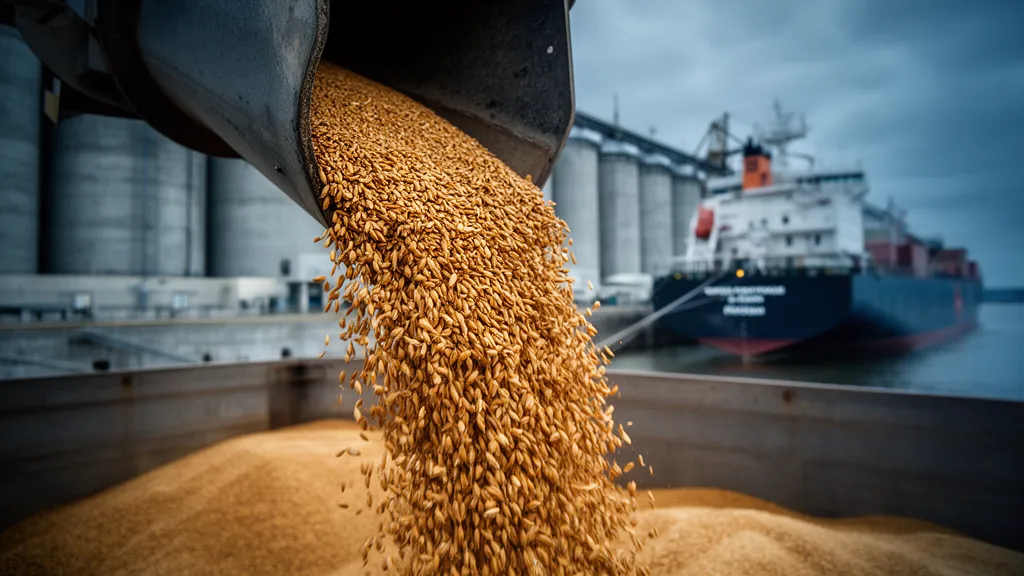
- Record Export Revenues: Russian oat exports reached nearly $62 million in 2025, surpassing the previous record of $59.3 million set in 2024.
- China-Driven Demand: China accounted for over $56 million of imports, more than 90% of total Russian oat export value.
- Strong Production Growth: Domestic oat output rose 25.8% year-on-year to 3.8 million tons, supported by higher yields.
- Yield Improvement: Average yields increased from 19 to 22.7 centners per hectare, boosting overall supply.
- Concentration Risk: Heavy reliance on Chinese demand leaves export flows exposed to single-market risk, though logistics for oats are gradually expanding.
Market Overview
Russia’s oat export sector set a new revenue record in 2025, with preliminary estimates from Agroexport placing total export value at nearly $62 million. This marks a 4.6% increase over the previous historic high of $59.3 million recorded in 2024. Physical exports exceeded 280,000 tons, although detailed year-on-year volume comparisons are not yet available, in part because EAEU delivery data currently covers only the first 10 months of 2025.
Export Destinations
China has cemented its role as the primary outlet for Russian oats, importing more than $56 million worth of product in 2025 and accounting for over 90% of total export value. Mongolia followed at a distant second with about $4 million in purchases, while the UAE contributed more than $600,000, highlighting the still-limited diversification of Russia’s oat export geography.
| Destination | Export Value 2025 (USD) | Share of Total Export Value |
|---|---|---|
| China | >$56,000,000 | >90% |
| Mongolia | ~$4,000,000 | ~6% |
| UAE | >$600,000 | <2% |
| Other Markets | Remaining balance | Minor share |
Production and Yield Performance
Robust export activity was supported by strong domestic production in 2025. According to preliminary Rosstat data, Russia harvested 3.8 million tons of oats, a 25.8% increase versus 2024. The improvement was driven largely by better yields, which rose from 19 to 22.7 centners per hectare, indicating improved agronomic performance and possibly more favorable weather conditions.
| Indicator | 2024 | 2025 | Change |
|---|---|---|---|
| Oat Production (million tons) | ~3.0 | 3.8 | +25.8% |
| Average Yield (centners/ha) | 19.0 | 22.7 | +3.7 |
| Export Value (USD million) | 59.3 | ~62.0 | +4.6% |
| Physical Exports (tons) | n/a | >280,000 | n/a |
Regional Production Leaders
Output gains were broad-based, with several key regions driving the national increase. Altai Krai led production with 538,600 tons, followed by Krasnoyarsk Krai at 352,100 tons. Novosibirsk Oblast delivered 242,300 tons, Tyumen Oblast 199,200 tons, and Bashkortostan 179,700 tons, underscoring the importance of Siberian and Ural regions in Russia’s oat balance sheet.
| Region | Oat Production 2025 (tons) |
|---|---|
| Altai Krai | 538,600 |
| Krasnoyarsk Krai | 352,100 |
| Novosibirsk Oblast | 242,300 |
| Tyumen Oblast | 199,200 |
| Bashkortostan | 179,700 |
Logistics and Market Impact
The relatively modest increase in export value versus the strong rise in production suggests competitive pricing is being used to defend and grow market share, particularly in China. For Black Sea logistics coordinators, oat flows remain a niche but gradually expanding segment. However, the dominance of a single buyer creates concentration risk and limits broader freight market impact, leaving the oat trade largely neutral for the wider grain shipping complex while providing incremental volume for specialized oat handlers.
Source: Market Data
Leave a Reply