
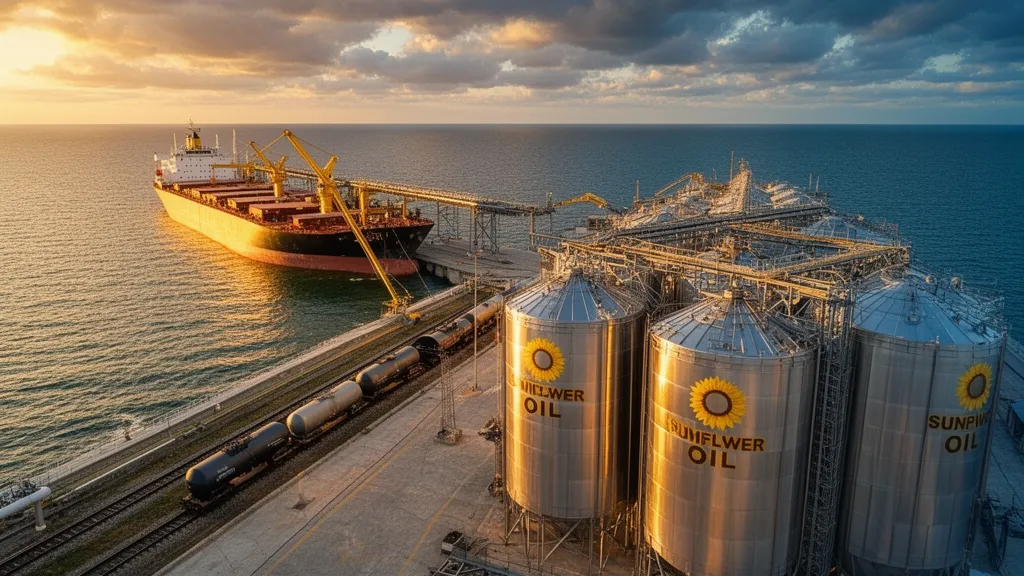
- Logistics Shift: Ukrainian rail vegetable oil exports fell 10% to 1.598 million tons in 2025, but port-directed shipments surged 66%, signaling a major reorientation toward seaborne routes.
- Border Pressure: Border crossing rail volumes of vegetable oil dropped 44.8% to 672,000 tons, reflecting capacity constraints and shifting trade routes.
- Processing Resilience: Oilcake and meal exports rose 3.2% to 2.971 million tons, the third-highest result since 2015, underscoring robust processing sector activity.
- Global Ranking: USDA projects Ukraine will export 4.2 million tons of sunflower oil in 2025, maintaining the world’s second-largest export position behind Russia at 4.8 million tons.
Rail Export Performance in 2025
JSC Ukrzaliznytsia transported 1.598 million tons of vegetable oil for export in 2025, a 10% decline versus 2024. Despite the overall drop, the logistics mix changed substantially as Ukraine rebalanced flows between ports and land borders.
| Category | 2025 Volume (mln tons) | YoY Change | Share of Total |
|---|---|---|---|
| Vegetable oil rail exports (total) | 1.598 | -10.0% | 100% |
| Vegetable oil via ports | 0.926 | +66.0% | 58% |
| Vegetable oil via border crossings | 0.672 | -44.8% | 42% |
Oilcake and Meal Export Structure
Oilcake and meal exports reached 2.971 million tons in 2025, up 3.2% year-on-year and marking the third-highest result since 2015. This performance trails only 2019 (2.9 million tons) and 2020 (3 million tons), highlighting sustained strength in Ukraine’s processing sector despite broader logistical disruption.
| Category | 2025 Volume (mln tons) | YoY Change | Share of Total |
|---|---|---|---|
| Oilcake & meal exports (total) | 2.971 | +3.2% | 100% |
| Oilcake & meal via ports | 0.811 | n/a | 29% |
| Oilcake & meal via border crossings | 1.980 | n/a | 71% |
Global Sunflower Oil Export Outlook
According to USDA forecasts, Ukraine is expected to export 4.2 million tons of sunflower oil, securing the second-largest position globally. Russia is projected to remain the leading exporter with 4.8 million tons, underscoring the continued dominance of the Black Sea region in global sunflower oil trade.
Logistics and Market Implications
The 66% jump in port-directed vegetable oil shipments indicates improved Black Sea corridor functionality and a deliberate pivot back to maritime routes. At the same time, the 44.8% decline in border crossings suggests congestion, higher overland costs, or a strategic reallocation of flows away from rail border exits. Robust oilcake and meal exports point to steady crush margins and active processing capacity. Traders and shippers should closely track whether this port-centric pattern persists, as it will shape freight differentials between port delivery versus land-border terms and influence basis levels for Ukrainian-origin vegoils and byproducts.
Source: Market Data
Leave a Reply