
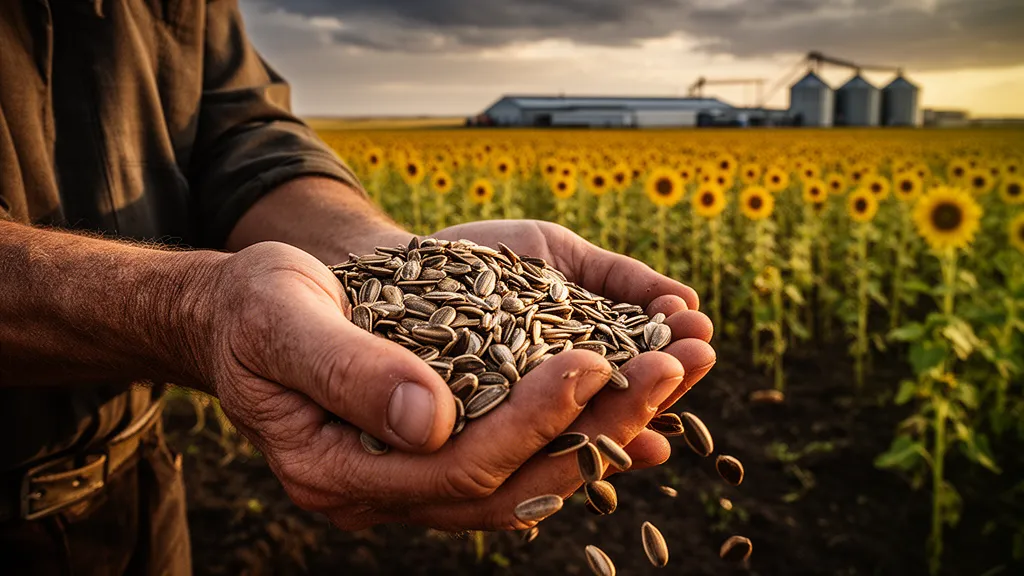
- Sunflower self-sufficiency tops 50%: Domestic sunflower seed supply in Russia passed the 50% mark in 2025, with sales rising 15% year-on-year.
- Broader seed security nearing target: Overall seed self-sufficiency across major crops approached 70%, moving closer to the 75% national food security goal.
- Regional leaders in localization: Altai Krai lifted its share of Russian sunflower seeds from 38% to 66%, while Omsk and Primorsky regions led in rapeseed and soybean adoption.
- Imports further restricted: Seed import quotas from unfriendly countries were cut by 18%, and restrictions extended through 2026, tightening foreign seed access.
- Market implications: Rising use of domestic genetics could reshape seed pricing, availability, and yield expectations ahead of the 2026 planting season.
Market Update
Russia’s seed industry continued its pivot toward domestic production in 2025, with RUSEED and Pole.RF highlighting a milestone in sunflower seeds: domestic material supplied more than half of the market, supported by a 15% year-over-year increase in sales. This marks a notable structural shift in the Black Sea seed landscape, where foreign genetics have historically dominated.
Altai Krai stood out as a key driver of this shift, boosting its use of Russian sunflower seeds from 38% to 66% in a single season. Other oilseed segments also posted strong localization metrics: soybean seeds reached 65% self-sufficiency with sales growth of 20–25%, while rapeseed seed supply climbed to 61% domestic. Regionally, Omsk Oblast reported 82% adoption of Russian rapeseed seeds, and Primorsky Krai achieved 61% domestic share for soybeans.
Across all major crops, Russia’s overall seed self-sufficiency approached 70%, narrowing the gap with the national 75% food security target. The trend is reinforced by government policy: authorities extended import restrictions on seeds from unfriendly countries—including sunflower, soybeans, rapeseed, wheat, corn, barley, rye, potatoes, and sugar beet—through the end of 2026, while cutting seed import quotas by 18%, from 18,300 to 15,000 tons.
Key Seed Self-Sufficiency Metrics
| Crop / Indicator | Region / Scope | 2025 Domestic Share | Sales Growth |
|---|---|---|---|
| Sunflower seeds | Russia (national) | >50% | +15% YoY |
| Sunflower seeds | Altai Krai | 66% (up from 38%) | n/a |
| Soybean seeds | Russia (national) | 65% | +20–25% |
| Soybean seeds | Primorsky Krai | 61% | n/a |
| Rapeseed seeds | Russia (national) | 61% | n/a |
| Rapeseed seeds | Omsk Oblast | 82% | n/a |
| All major crops (seeds) | Russia (national) | ~70% self-sufficiency | n/a |
| Seed import quota | Unfriendly countries | 15,000 tons (2026) | –18% vs. 18,300 tons |
Market Analysis and Trading Implications
The acceleration in domestic sunflower seed production and adoption enhances Russia’s agricultural independence, reducing exposure to foreign breeding programs and potential supply disruptions. For traders and input suppliers, the increase in domestic market share may alter price benchmarks for seed contracts, as local genetics compete more directly with remaining imports in terms of cost, performance, and service.
The 15% rise in sunflower seed sales, alongside robust growth in soybeans, signals broad farmer willingness to switch to Russian varieties. If these genetics deliver competitive yields and oil content, Black Sea sunflower and oilseed production costs could stabilize or even decline, supporting margins in export-oriented regions. However, underperformance versus imported hybrids would introduce yield risk, complicating forward production and export forecasts.
Heading into the 2026 planting season, the combination of tighter import quotas and higher domestic self-sufficiency suggests a structurally smaller window for foreign seed suppliers. Market participants should closely track on-farm performance data, regional adoption trends, and any adjustments in government support for breeding programs, as these will shape long-term competitiveness of Russian-origin oilseeds on global markets.
Source: Market Data
Leave a Reply