
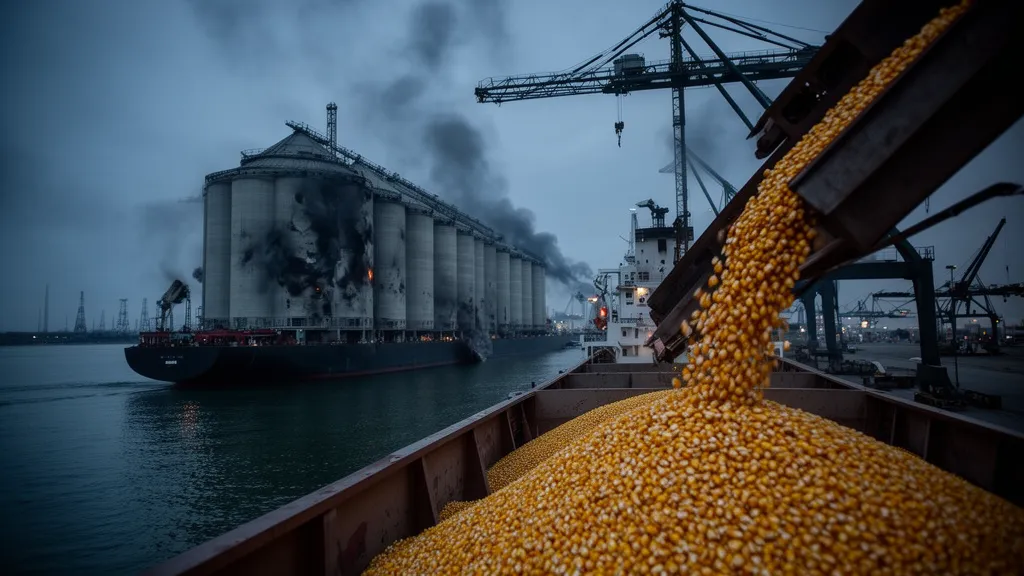
- Feed corn FOB Black Sea bids eased to USD 210-218/tonne and asks to USD 214-222/tonne for Dec–Jan, down USD 1-3 in under a week.
- Ongoing attacks on Ukrainian port and energy infrastructure are constraining seaborne exports and weighing on importer demand.
- Corn remains Ukraine’s most actively exported crop, but persistent logistics bottlenecks are keeping price pressure firmly bearish.
Market Update
Ukrainian feed corn prices on an FOB Black Sea basis continued their gradual decline this week, with indicative December–January bids slipping to USD 210-218 per tonne and asks to USD 214-222 per tonne. This represents a USD 1-3 per tonne drop in less than a week, reflecting worsening logistics conditions and softer importer interest.
The downward trend is closely tied to persistent disruptions to Ukraine’s seaborne export operations. Systematic Russian attacks on port and energy infrastructure are generating shipping bottlenecks, delaying loadings, and creating uncertainty around execution. As a result, some buyers remain cautious about committing to Ukrainian-origin corn despite its competitive pricing.
Although corn is currently Ukraine’s most actively exported crop, the volume of trade has not been sufficient to offset the bearish sentiment stemming from these infrastructure issues. Price pressure has been sustained as sellers adapt to reduced bargaining power and factor higher logistics risks into offers.
Price Overview
| Commodity | Delivery Period | Market | Bid Range (USD/tonne FOB) | Ask Range (USD/tonne FOB) | Weekly Change |
|---|---|---|---|---|---|
| Ukrainian Feed Corn | Dec–Jan | Black Sea | 210–218 | 214–222 | -1 to -3 |
Analysis
Bearish. Infrastructure attacks and export disruptions are exerting sustained downward pressure on Ukrainian corn prices, even as export activity remains relatively robust. The USD 1-3 per tonne decline highlights a shift toward weaker seller leverage, with logistics uncertainty forcing more aggressive pricing to attract demand.
For traders, the key variables to watch are the pace of shipping capacity restoration and the reliability of port and energy infrastructure. A meaningful improvement in these areas would be necessary for price stabilization. In the meantime, the growing discount on Ukrainian corn may draw opportunistic buying interest, but execution and delay risks remain elevated and must be priced into any trading strategy.
Source: Market Data
Leave a Reply