Key Takeaways
- Policy Shift: Azerbaijan plans to raise domestic food wheat production from 20% to 50% of its 1.8 million tons annual demand over the coming years.
- Import Dependence: The country currently imports around 1.62 million tons of wheat annually, with Russia supplying approximately 90% of total imports.
- Gradual Timeline: Despite self-sufficiency goals, wheat import volumes are expected to remain broadly unchanged through 2026.
- Market Impact: Long-term, this is neutral to slightly bearish for Russian wheat exports as Azerbaijan gradually diversifies supply and boosts local output.
Market Update
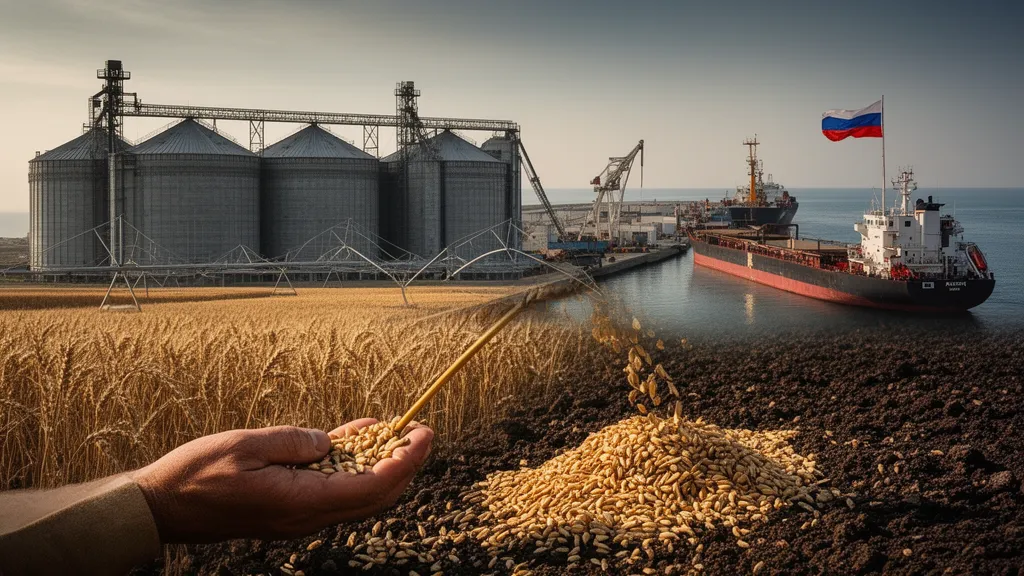
Azerbaijan has outlined plans to significantly reduce its reliance on Russian wheat imports by expanding domestic production capacity. At present, the country produces only about 20% of its food wheat requirements and imports roughly 1.62 million tons annually, with Russia accounting for approximately 90% of those imports.
According to ministry official Safarli, Azerbaijan’s annual food wheat demand is around 1.8 million tons. Through a multi-year development program focused on modern irrigation infrastructure, improved agricultural practices, and sector consolidation, the government aims to increase domestic production to cover 50% of this demand.
Despite these ambitions, wheat import volumes are expected to remain near current levels through 2026, underscoring that the transition toward higher self-sufficiency will be gradual rather than immediate.
Data Overview
| Metric | Value |
|---|---|
| Annual food wheat demand | 1.8 million tons |
| Current domestic share of demand | 20% |
| Target domestic share of demand | 50% |
| Estimated current imports | 1.62 million tons |
| Share of imports from Russia | ~90% |
| Import outlook | Imports expected to remain broadly unchanged through 2026 |
Analysis
Neutral to Slightly Bearish for Russian Wheat Exports (Long-term)
Azerbaijan is a relatively small wheat buyer in global terms, so the near-term impact on Russian wheat exports is limited, particularly as import volumes are projected to hold steady through 2026. However, the strategy to lift domestic production from covering 20% to 50% of food wheat demand signals a gradual erosion of Russian market share in the South Caucasus over the medium to long term.
The outcome will hinge on the effectiveness and pace of investment in irrigation systems, farm consolidation, and agronomic improvements. If Azerbaijan can achieve competitive yields and costs versus Russian-origin wheat, import requirements could decline toward the end of the decade. Market participants should monitor the implementation of infrastructure projects, cropping decisions, and realized production levels in upcoming seasons.
Source: Market Data
Leave a Reply