
- Neutral to slightly bearish: Spring frost during flowering sharply reduced winter rapeseed yields in Ryazan, highlighting weather risks for European Russia.
- Financial impact: Ingosstrakh paid 11.4 million rubles in insurance compensation for the damaged winter rapeseed crop.
- Risk management: The event may influence regional planting decisions and demand for crop insurance and other hedging tools.
Russian Winter Rapeseed Crop Damage in Ryazan Region
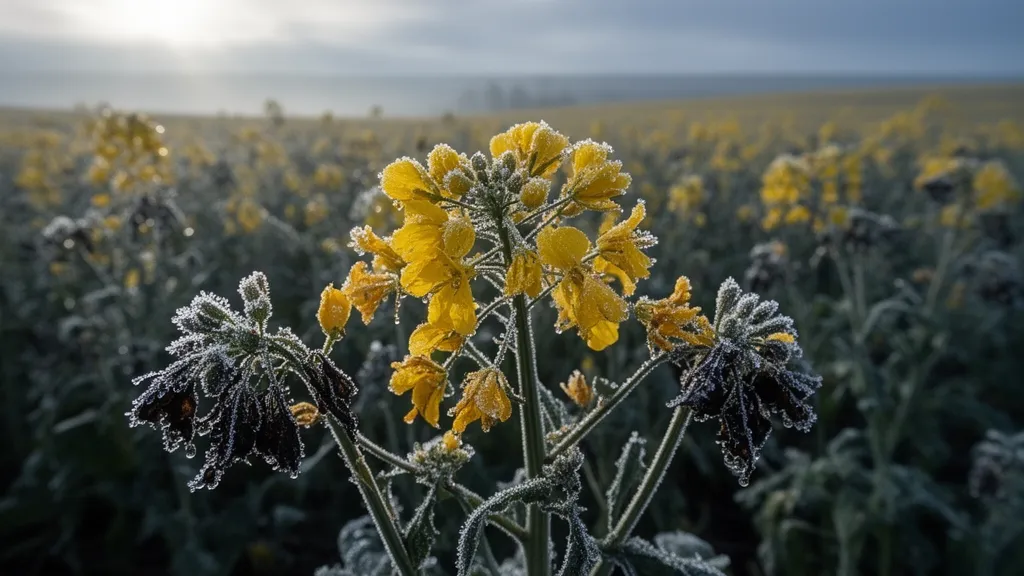
A major agricultural producer in Russia’s Ryazan region has received an insurance payout of 11.4 million rubles from Ingosstrakh after significant damage to winter rapeseed crops. The losses were caused by an abnormal cold snap in May 2025, which hit European Russia during the most critical growth phase for rapeseed: flowering.
The sharp temperature drop coincided with the vulnerable flowering period, leading to severe damage across most of the insured fields. Post-harvest assessments confirmed a marked reduction in yields directly linked to the spring frost. Following a comprehensive evaluation, Ingosstrakh recognized the incident as an insured event under its agricultural crop insurance policy, which covers crop loss and damage.
Insurance Coverage and Financial Exposure
The insurance program in place for the client covers a broad range of risks, including natural hazards and disasters, pest infestations, and disruptions to critical utilities such as electricity, heat, and water. The 11.4 million ruble payout illustrates the scale of financial exposure associated with weather-related crop failures, especially when damage occurs at key phenological stages.
| Item | Value |
|---|---|
| Insurance compensation | 11.4 million rubles |
| Region | Ryazan, European Russia |
| Affected crop | Winter rapeseed |
| Key damaging event | Spring frost during flowering (May 2025) |
Market Impact and Outlook
This localized event in Ryazan underscores the broader production risks for winter rapeseed across the Black Sea and European Russia. Frost during flowering represents a worst-case timing scenario, sharply curbing yield potential. While the damage is not yet systemic across the region, it highlights vulnerability of rapeseed to abnormal temperature swings and could encourage farmers to reassess planting decisions, diversify crops, or expand insurance and hedging coverage.
For the regional rapeseed balance, the event is neutral to slightly bearish for production expectations if similar weather volatility persists, as repeated frost risks could cap yield potential and introduce uncertainty into supply planning for upcoming seasons.
Source: Market Data
Leave a Reply