
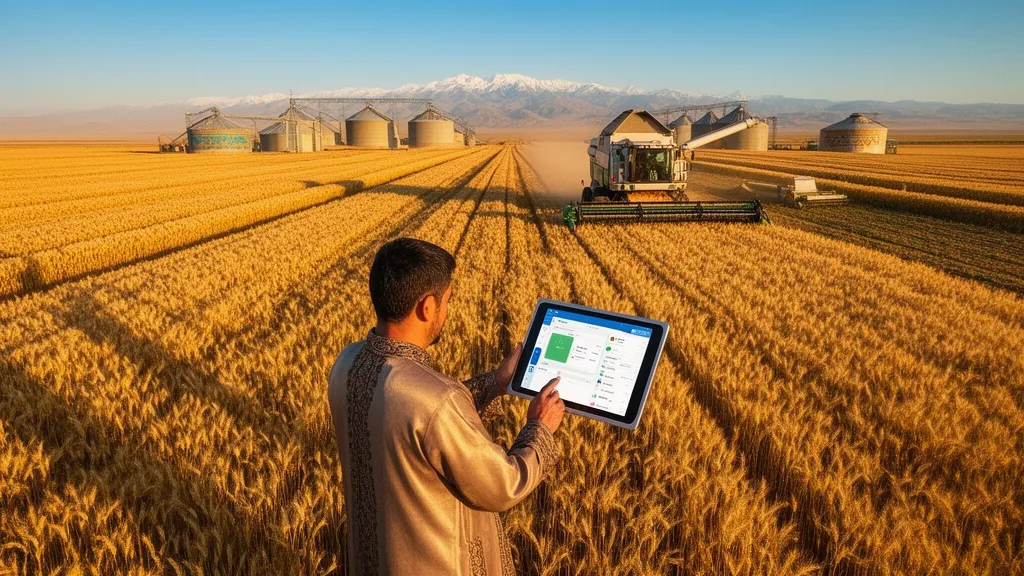
- Supportive: Uzbekistan to raise total cotton and grain support to 34.2 trillion soums in 2026, bolstering domestic wheat production.
- Neutral: Despite higher subsidies and digitalization, the overall impact on Black Sea wheat trade is expected to remain limited.
- Structural: Shift to a credit rating-based loan system and digital “Agrosubsidia” platform aims to improve financial discipline and speed of subsidy delivery.
Uzbekistan Wheat Subsidy Overhaul for 2026
Uzbekistan plans a major restructuring of its agricultural support system for wheat and grain producers starting in 2026. Total state support for cotton and grain will increase to 34.2 trillion soums, up from 29 trillion soums in 2025. This funding covers financing for production, machinery purchases, and water-saving technologies, in addition to the 2.35 trillion soums in direct subsidies already provided to the sector this year.
The new framework introduces a tiered, credit rating-based lending model. Farmers with an “A” credit rating will receive loans with interest rates reduced by 2 percentage points, while “B”-rated farms will gain a 1 percentage point reduction. This “discipline – cheaper loans” approach is designed to incentivize strong payment discipline and improve the financial resilience of larger and more reliable producers.
Digitalization and Streamlined Subsidy Distribution
The government intends to replace the current system of 52 separate subsidy types with a fully digital and integrated process. Through the “Agroportal” and its “Agrosubsidia” information system, data from more than 10 ministries and agencies will be consolidated, significantly reducing processing times and administrative burden for farmers.
Of the 1.3 trillion soums allocated specifically for subsidies in 2026, a portion will be distributed proactively without the need for farmer applications, while the remainder will go through simplified digital approval procedures. This should help producers make planting and investment decisions earlier and with greater certainty.
Market Impact and Regional Context
The combination of higher funding, cheaper credit for disciplined borrowers, and streamlined digital delivery signals Uzbekistan’s commitment to sustaining wheat production levels in 2026. Faster and more predictable subsidy flows are likely to reduce delays that historically affected planting schedules and technology upgrades.
For broader Black Sea wheat markets, the impact is assessed as neutral. While improved domestic production capacity may slightly reduce Uzbekistan’s import needs, the country remains a relatively small participant in regional grain trade. Export corridors from Russia, Ukraine, and Kazakhstan are therefore unlikely to see meaningful direct effects from these policy changes.
| Indicator | 2025 | 2026 (Planned) |
|---|---|---|
| Total support for cotton & grain production | 29.0 trillion soums | 34.2 trillion soums |
| Direct subsidies to the sector (latest year) | 2.35 trillion soums | 1.3 trillion soums earmarked for subsidies |
| Loan interest reduction for “A” credit rating | N/A | -2 percentage points |
| Loan interest reduction for “B” credit rating | N/A | -1 percentage point |
| Number of subsidy types | 52 (current system) | Consolidated via “Agrosubsidia” |
Source: Market Data
Leave a Reply