
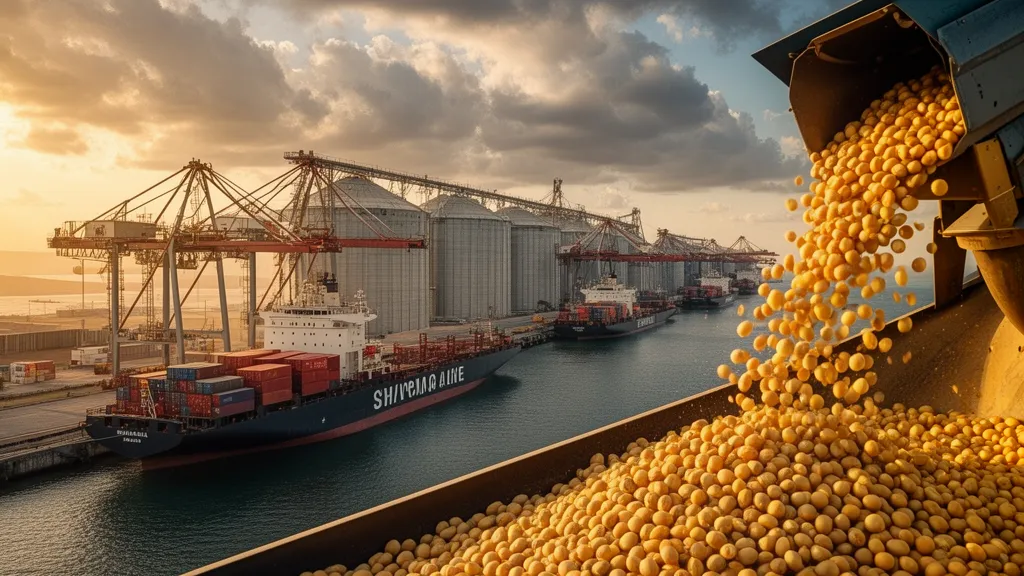
- Bullish South America: Brazil and Argentina sharply increased soybean exports to China, capturing greater global market share.
- Bearish US & Black Sea: US soybean exports slumped over 50% year-on-year, while increased South American supply pressures global oilseed prices and weighs on Black Sea competitiveness.
South American Soybean Export Surge
South American exporters strengthened their hold on the global soybean market in November, as Brazil and Argentina significantly expanded shipments to China while US exports contracted sharply. Oil World data highlights a pronounced shift in trade flows toward South American origins, even outside the traditional Brazilian export peak.
Brazil: Volumes Climb Despite Off-Season
Brazil exported 4.2 million tons of soybeans in November, a 68% year-on-year increase from 2.5 million tons in November 2024, despite November typically being outside the country’s peak export window. China absorbed 4 million tons of these shipments, almost doubling from 2.1 million tons a year earlier. Over the August–November period, Brazilian soybean exports reached 24.9 million tons, up 9 million tons from 15.9 million tons in the same period last year.
Argentina: Steady Expansion of Shipments to China
Argentina also expanded its presence in the Chinese market, shipping 2 million tons of soybeans to China in November. For August–November 2025, Argentine soybean exports totaled 7.2 million tons, reflecting a year-on-year gain of 900,000 tons. This growth complements Brazil’s surge in exports, reinforcing South America’s role as China’s primary soybean supplier.
United States: Exports Slide to Multi-Year Lows
US soybean exports fell by more than 50% compared with last year, underscoring a significant loss of market share to South American competitors. Although shipments to China are scheduled to begin in December, volumes are expected to remain well below both last year’s levels and historical averages, signaling continued weakness in US export performance.
Comparative Export Volumes
| Exporter | Period | 2024/Prev. Year (mln t) | 2025/Current Year (mln t) | Change (mln t) | Change (%) |
|---|---|---|---|---|---|
| Brazil | November | 2.5 | 4.2 | +1.7 | +68% |
| Brazil | Aug–Nov total | 15.9 | 24.9 | +9.0 | +56.6% |
| Brazil → China | November | 2.1 | 4.0 | +1.9 | +90.5% |
| Argentina | Aug–Nov total | 6.3 | 7.2 | +0.9 | +14.3% |
| Argentina → China | November | n/a | 2.0 | n/a | n/a |
| United States | Exports (overall) | 100 (index) | <50 (index) | >-50 (index) | >-50% |
Implications for Black Sea Oilseed Markets
The dominance of South American soybeans in Chinese imports is neutral to bearish for the Black Sea oilseed complex. With China’s near-term needs being met by competitively priced Brazilian and Argentine supplies, demand support for alternative oilseeds such as sunflower and rapeseed is limited. At the same time, the weakened US export position points to a comfortable global supply environment, which may cap upside potential in Black Sea oil and meal prices and intensify competition in key destination markets.
Source: Market Data
Leave a Reply