
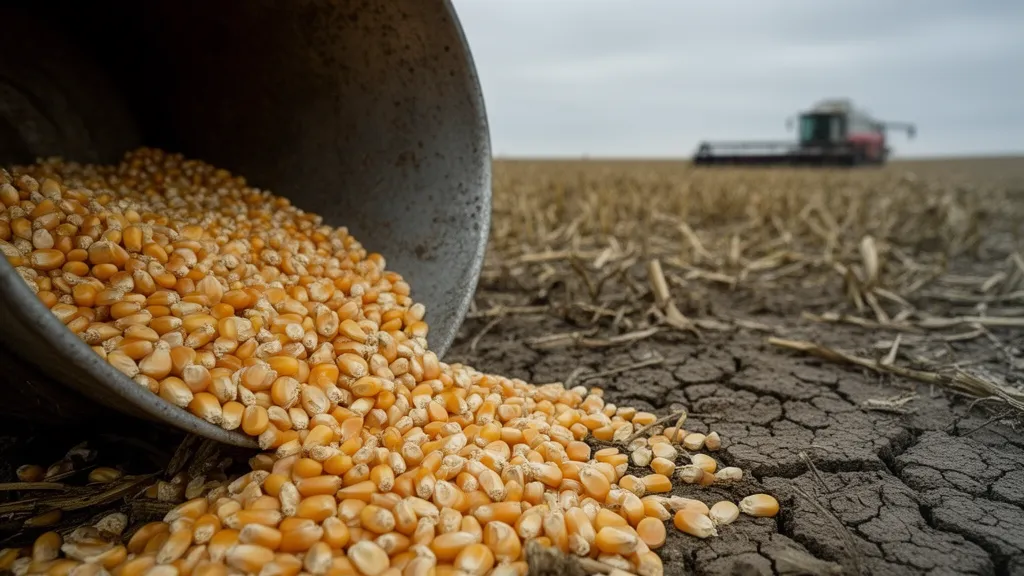
- Production down 19.3%: Rostov Oblast corn output fell to 233,300 tons in 2025 despite slightly higher yields.
- Acreage cutbacks: Planted area shrank by 22,000 hectares as farmers reacted to 2024 weather losses and poor marketing conditions.
- Yield resilience: Corn yields edged up to 26 c/ha, making it one of only two crops in the region to post yield gains.
- Broader grain weakness: Average grain and legume yields declined 21.5%, with sharp drops in winter wheat, barley, and sunflower.
- Market implications: Persistent supply tightness supports regional corn values, but weak export demand limits upside.
Rostov Oblast Corn Market Update
Rostov Oblast’s 2025 corn harvest totaled 233,300 tons, a 19.3% decline from the 289,000 tons produced in 2024, according to the regional Ministry of Agriculture. The drop occurred even as average yields improved slightly to 26 centners per hectare from 25.8 c/ha a year earlier.
The key driver of the smaller crop was a 22,000-hectare reduction in sown area. Farmers scaled back corn plantings after severe weather-related losses in 2024, when production more than halved from 2023’s 583,000 tons and yields plunged from 54.4 c/ha. The experience reinforced risk aversion and pushed many producers to shift land into alternative crops.
Alexander Rodin, Chairman of the Association of Peasant Farms and Agricultural Cooperatives (AKKOR), noted that planting decisions reflected both weather risk and structural constraints. Limited and tight sales channels, along with equipment requirements that are difficult for small-scale producers to meet, have confined most corn production to larger livestock-oriented operations.
Regional Crop Performance
The corn sector stood out in an otherwise weak year for Rostov’s grain complex. Average grain and legume yields fell 21.5% to 25.9 c/ha from 33 c/ha. Winter wheat yields dropped 22% to 27.8 c/ha, winter barley yields fell from 43.3 c/ha to 24.7 c/ha, and sunflower yields sank to just 9.8 c/ha. Corn and millet were the only crops to record yield gains, highlighting a partial recovery from 2024’s burn-out conditions.
| Indicator | 2023 | 2024 | 2025 | Change 2024–2025 |
|---|---|---|---|---|
| Corn production (tons) | 583,000 | 289,000 | 233,300 | -19.3% |
| Corn yield (c/ha) | 54.4 | 25.8 | 26.0 | +0.2 c/ha |
| Average grain & legumes yield (c/ha) | — | 33.0 | 25.9 | -21.5% |
| Winter wheat yield (c/ha) | — | — | 27.8 | -22% vs. prior year |
| Winter barley yield (c/ha) | — | 43.3 | 24.7 | Sharp decline |
| Sunflower yield (c/ha) | — | — | 9.8 | ~1.5x lower vs. prior year |
Market Implications
The ongoing contraction in Rostov Oblast corn output underscores persistent supply tightness from Russia’s southern producing regions. While modest yield recovery points to improved growing conditions relative to 2024, acreage cuts reveal deeper economic and logistical constraints. Weak demand, marketing bottlenecks, and infrastructure limitations are encouraging farmers to pivot away from corn.
This shift reduces domestic feed grain availability and may lend support to regional corn values. However, limited export demand continues to cap price upside. Market participants should watch 2026 planting decisions to gauge whether current acreage reductions become structural, potentially reshaping Russia’s internal feed grain balance.
Source: Market Data
Leave a Reply