
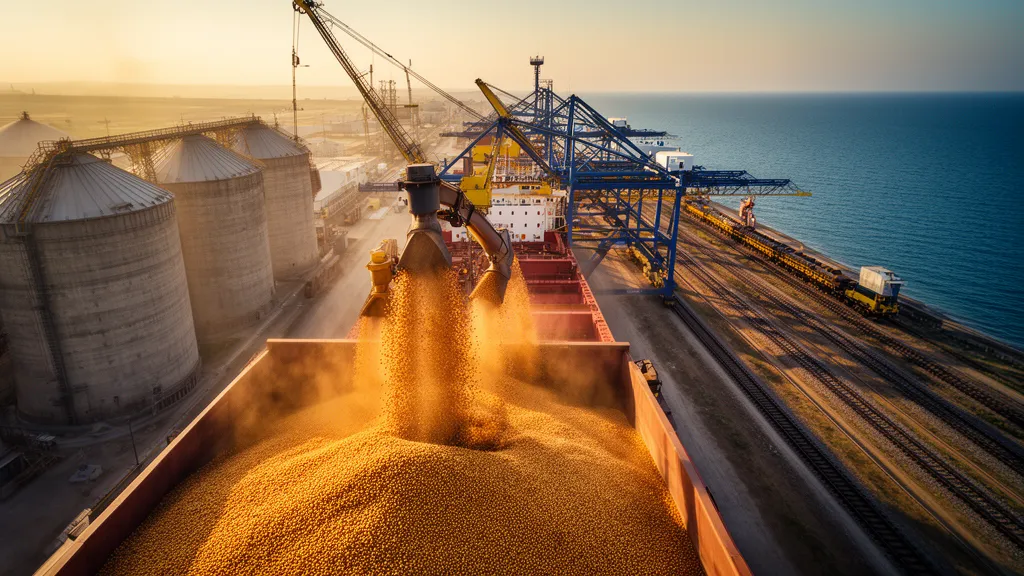
Ukrainian Soybean Prices Climb; US-Uzbekistan Pact Opens Trans-Caspian Corridor
- Ukrainian port soybean prices strengthened to USD 416–430/t CPT-port and UAH 18,200–18,500/t as processors and exporters compete for a reduced harvest.
- US-Uzbekistan soybean MoU aims to expand American soy access into the Trans-Caspian region via Uzbekistan as a strategic trade gateway.
- Global demand backdrop remains firm with US soybean imports into key Asian markets up 29% y/y and Vietnam targeting 2.8 MMT of imports in 2025/26.
- Outlook is broadly bullish for Black Sea soybeans as tight Ukrainian supply and expanding Trans-Caspian demand support regional price fundamentals.
Market Update
Ukrainian soybean prices continued to firm at ports, with foreign currency bids reported in a USD 416–425/t CPT-port range and occasional deals reaching USD 430/t CPT-port. In local currency, port bids were quoted at UAH 18,200–18,500/t CPT-port, underpinned by strong competition between domestic crushers and export channels for a sharply reduced crop.
Domestic soybean prices also moved higher, supported by active soybean meal export programs that are maintaining robust crush margins. The combination of tight raw bean availability and steady meal demand is keeping domestic sellers in a strong negotiating position, with buyers forced to raise bids to secure volumes.
| Market | Price / Volume | Basis / Period |
|---|---|---|
| Ukrainian soybeans (USD) | USD 416–425/t (up to 430/t) | CPT-port, spot |
| Ukrainian soybeans (UAH) | UAH 18,200–18,500/t | CPT-port, spot |
| US soybean imports (selected Asian markets) | +29% y/y | Latest reported period |
| Vietnam soybean imports (forecast) | 2.8 MMT | 2025/26 season |
US–Uzbekistan Trade Framework
In a parallel development reshaping regional trade flows, the American Soybean Association (ASA) and Uzbekistan’s Ministry of Investment, Industry, and Trade signed a Memorandum of Understanding in New York, during a visit led by Minister Lyaziz Kudratov. The agreement covers cooperation in feed production, poultry and dairy development, aquaculture, soybean processing, and quality standardization.
The MoU is designed to establish direct procurement links between Uzbek buyers and US soybean suppliers, positioning Uzbekistan as a strategic gateway for American soybeans into the broader Trans-Caspian region. ASA CEO Stephen Sensky called the agreement “an important milestone for the promotion of U.S. soybeans in Uzbekistan” that will “open up additional opportunities for American soybeans in the Trans-Caspian region.” The initiative is backed by the US Department of Agriculture via Market Access and Foreign Market Development programs.
Analysis and Outlook
Bullish for Black Sea soybeans: Ukraine’s reduced harvest and strong domestic crush demand continue to underpin firm port bids and limit export availability. This tightness may divert some regional demand toward alternative suppliers while supporting a higher price floor for Black Sea origins overall.
The US–Uzbekistan soybean framework, while centered on American supply, underscores growing Trans-Caspian demand as regional processing and feed industries develop. Over time, improved logistics, additional crushing capacity, and diversified procurement strategies in the region could create incremental opportunities for Black Sea exporters alongside US supply.
Traders should track farmer selling behavior in Ukraine, as persistently elevated prices could incentivize additional volumes to move, potentially easing nearby tightness. At the same time, the 29% year-on-year increase in US soybean imports into key Asian markets, combined with Vietnam’s projected 2.8 MMT import program for 2025/26, confirms solid global demand fundamentals supporting soybean and product prices.
Source: Market Data
Leave a Reply