
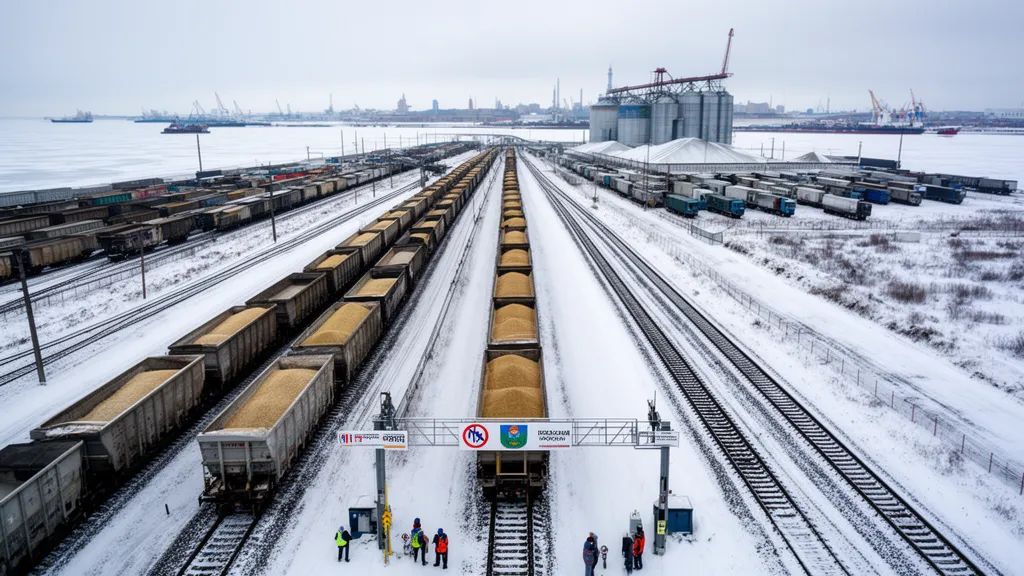
- Bullish: Short-term domestic price support is possible for EU buyers as Kazakh grain faces temporary export constraints via a key Russian corridor.
- Bearish: Kazakh grain exporters face logistical bottlenecks and higher costs as rail freight to St. Petersburg’s Novy Port is suspended from December 7–16.
Russian Railways Ban on Kazakh Grain Shipments
Russian Railways has initiated a temporary halt on all Kazakh rail grain shipments to the Novy Port station, which serves the JSC Sea Port of Saint Petersburg. The Central Railway Transport Agency (CSZhT) confirmed that the restriction applies to grain cargoes from all railway stations in Kazakhstan destined for Novy Port.
According to a CSZhT communication dated December 2, the ban will be in force from December 7 through December 16. During this period, no Kazakh grain rail freight will be accepted for transportation to the Novy Port terminal.
Market Impact and Logistics
The Novy Port station is a critical export gateway for Kazakh grain heading to European Union markets. The sudden suspension creates a short-term logistical bottleneck, forcing exporters and traders to reconsider routing and timing of shipments.
With rail freight flows temporarily blocked on this corridor, domestic Kazakh grain prices may come under downward pressure as exportable supply backs up inland. Market participants with scheduled shipments must factor in delays and evaluate alternative routes, which are likely to be more expensive or capacity-constrained.
While the broader Black Sea grain market impact is expected to remain limited due to the short duration of the ban, the episode underscores ongoing logistical and regulatory risks in regional supply chains. Participants exposed to Russian transit routes should closely monitor similar restrictions and build contingency options into their freight and hedging strategies.
Source: Market Data
Leave a Reply