
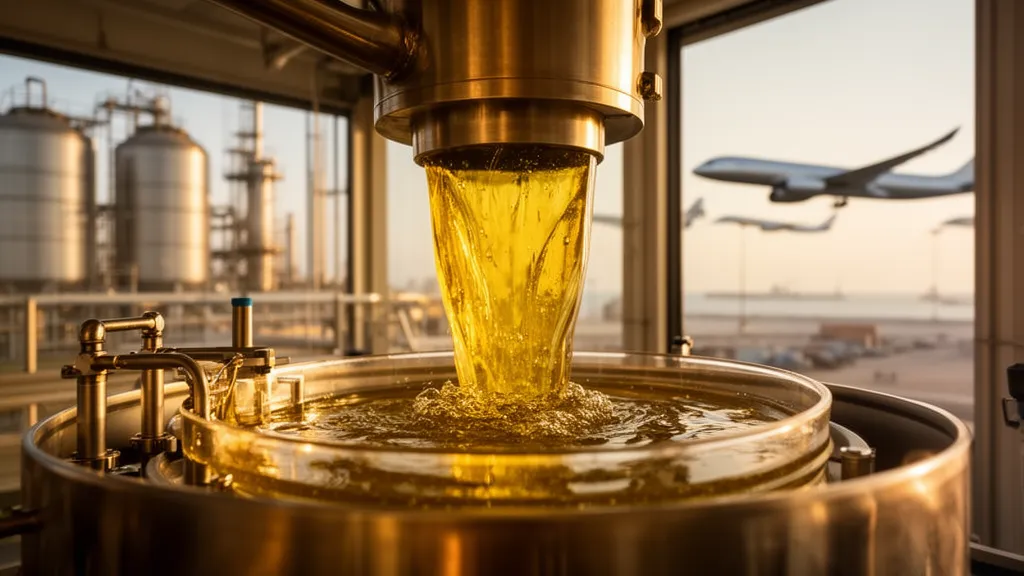
- New SAF Capacity: Egypt will build its first sustainable aviation fuel (SAF) plant in Alexandria with an annual capacity of 120,000 tons, using used vegetable oil as feedstock.
- Domestic UCO Demand: The project creates a significant new, consistent demand source for used cooking oil in a major Black Sea sunflower oil import market.
- Bullish Vegetable Oils: Increased competition for used cooking oil is expected to tighten Egypt’s domestic oil balance and provide long-term price support for virgin vegetable oils, especially sunflower oil.
- Emissions Impact: The plant is projected to cut carbon emissions by around 400,000 tons per year, aligning environmental targets with commercial incentives.
Egypt Launches First SAF Plant from Used Vegetable Oil
Egypt’s Ministry of Petroleum and Mineral Resources has confirmed the country’s first project to produce sustainable aviation fuel (SAF) from used vegetable oil, reinforcing the government’s push into low-carbon fuels. The state-owned Egyptian Petrochemicals Holding Company (ECHEM) has signed a license agreement with Honeywell UOP to construct the new facility in Alexandria.
The plant is designed to convert used vegetable oil into 120,000 tons of SAF annually. Officials estimate the facility will reduce carbon emissions by approximately 400,000 tons per year, underlining its role as both an environmental and commercial priority. The project marks an important step in building a domestic biofuels industry in one of the world’s key agricultural import markets.
Market Implications for Vegetable Oils and UCO
This development is long-term bullish for the vegetable oil complex. Egypt is a critical destination for Black Sea sunflower oil, and the introduction of a 120,000-ton annual demand center for used cooking oil (UCO) will tighten the domestic Egyptian oil market. Because UCO is a downstream product of frying oils, stronger, stable offtake into SAF production will translate into firmer underlying demand and price support for virgin vegetable oils, including sunflower oil.
The new SAF project is also likely to reduce the availability of Egyptian UCO for export, potentially tightening global biofuel feedstock supply and supporting values in the broader waste-oils complex. Traders and crushers supplying the Egyptian market should anticipate structurally higher competition for both virgin and waste oils over the medium to long term.
| Metric | Value | Notes |
|---|---|---|
| SAF Plant Location | Alexandria, Egypt | New domestic biofuel hub |
| Annual SAF Capacity | 120,000 tons | Produced from used vegetable oil |
| Estimated CO2 Reduction | 400,000 tons/year | Environmental benefit from SAF output |
Source: Market Data
Leave a Reply