
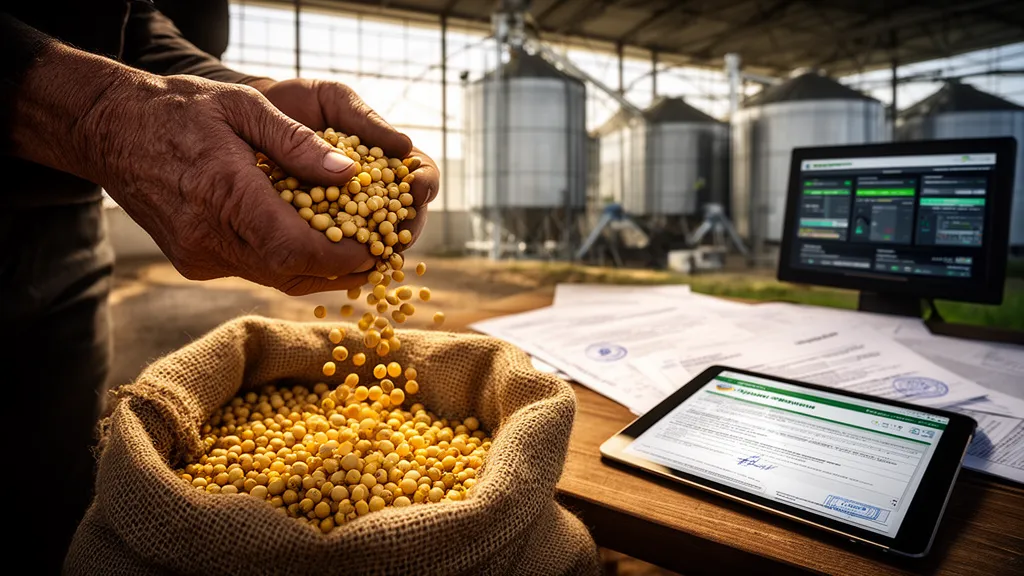
- Regulatory Shift: Ukraine has introduced a new monitoring system for soybean and rapeseed exports to verify producer data against the State Agrarian Register.
- Targeted Duty Exemptions: Export duty exemptions are now designed to benefit verified agricultural producers rather than trading intermediaries.
- Support for Farmers: Export duties paid by traders will fund a special budget to support frontline farmers, processing grants, and war risk insurance.
- Market Impact: The measure is broadly bullish for compliant producers, bearish for intermediaries facing higher costs and complexity, and neutral for overall logistics capacity.
Regulatory Update on Soybean and Rapeseed Exports
On December 3, the Cabinet of Ministers of Ukraine adopted a resolution that tightens oversight of soybean and rapeseed exports. The new rules introduce a monitoring mechanism that cross-checks declared export volumes with production data stored in the State Agrarian Register, with the goal of ensuring that export duty exemptions accrue directly to primary producers.
Under this system, the Ministry of Economy will conduct monthly verifications of export declarations. If discrepancies are identified between reported export volumes and registered production, the Chamber of Commerce and Industry is required to annul the associated export opinions, effectively blocking those shipments from benefitting from duty exemptions.
According to Deputy Minister of Economy Taras Vysotsky, this creates a more transparent framework in which genuine producers, rather than intermediaries, qualify for export duty relief. Duties collected from traders who cannot demonstrate direct production links will be channeled into a dedicated budget line to support farmers in frontline regions, processing grants, and war risk insurance mechanisms.
Market Impact Analysis
Producers (Bullish): Farmers who are properly registered and can prove their production volumes stand to capture more value from soybean and rapeseed exports. Direct access to duty exemptions can improve net farmgate returns and incentivize formalization of production records in the State Agrarian Register.
Traders (Bearish / Increased Complexity): Intermediaries now face higher compliance risk and a greater likelihood of absorbing export duty costs when sourcing from multiple smaller producers. This may compress trading margins and encourage more structured, traceable supply chains or direct contracting with larger, well-documented farms.
Logistics (Neutral): While the measure does not explicitly restrict export volumes, it does introduce additional administrative checks. Exporters, forwarders, and logistics coordinators will need to ensure that all documentation aligns precisely with the State Agrarian Register to avoid cargo delays or cancellation of export certificates.
Overall, the policy is designed to increase transparency and redirect fiscal benefits and duty revenues toward Ukraine’s agricultural sector, particularly in war-affected areas, rather than to reduce soybean and rapeseed export flows.
Source: Market Data
Leave a Reply