
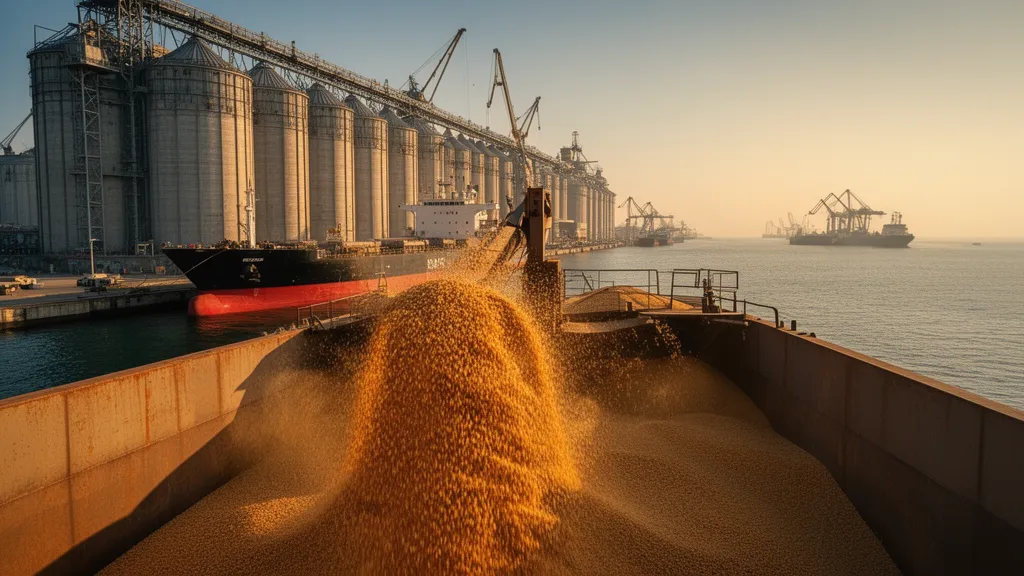
- Russian 12.5% protein wheat export prices have eased to $228–230/t FOB, their lowest level since mid-September.
- Growing competition from large expected wheat harvests in Australia and Argentina is pressuring global export prices lower.
- Slow farmer selling and relatively tight global wheat reserves are limiting further downside in international prices.
Russian Wheat Prices Weaken on Southern Hemisphere Competition
Russian export quotations for 12.5% protein wheat have fallen by $4/t since mid-November, slipping to $228–230/t FOB and marking their lowest level since mid-September. The decline coincides with increasingly optimistic production outlooks in the Southern Hemisphere, which are expanding global exportable wheat supply and intensifying competition in key destination markets.
Southern Hemisphere Harvest Pressure
The Buenos Aires Grain Exchange now expects an Argentine wheat crop of 25.5 million tonnes, while Australian bureau ABARES projects national wheat output at 35.6 million tonnes, the country’s third-largest harvest on record. These bumper crops are already reflected in export pricing, with both Australian and Argentine offers moving lower and challenging Black Sea origins on price-sensitive tenders.
| Origin | Current Price (FOB) | Change Since Mid-Nov |
|---|---|---|
| Russia (12.5% protein) | $228–230/t | – $4/t |
| Australia | $249/t | – $4/t |
| Argentina | $208/t | – $7/t |
Supportive Factors: Farmer Selling and Stocks
Despite the mounting harvest pressure, two factors are preventing a steeper decline in global wheat prices. Farmers in many producing regions remain reluctant to sell at or below cost-of-production levels, slowing the flow of grain to export channels. At the same time, SovEcon estimates the carryover stocks-to-consumption ratio for major exporters at 16.6% this season, well below the historical peak of 19.4%, underscoring that global reserves remain relatively constrained.
Market Outlook and Price Sentiment
Bearish: The near-term outlook for Black Sea wheat remains under pressure as the arrival of competitively priced Australian and Argentine supplies encourages major importers, including Egypt, to delay or diversify purchases. To maintain market share in core destinations, Black Sea exporters may need to keep offers sharp, reinforcing the current downtrend. While tighter stocks and slow farmer selling provide a floor, the dominant short-term driver is increased export competition from the Southern Hemisphere.
Source: Market Data
Leave a Reply