
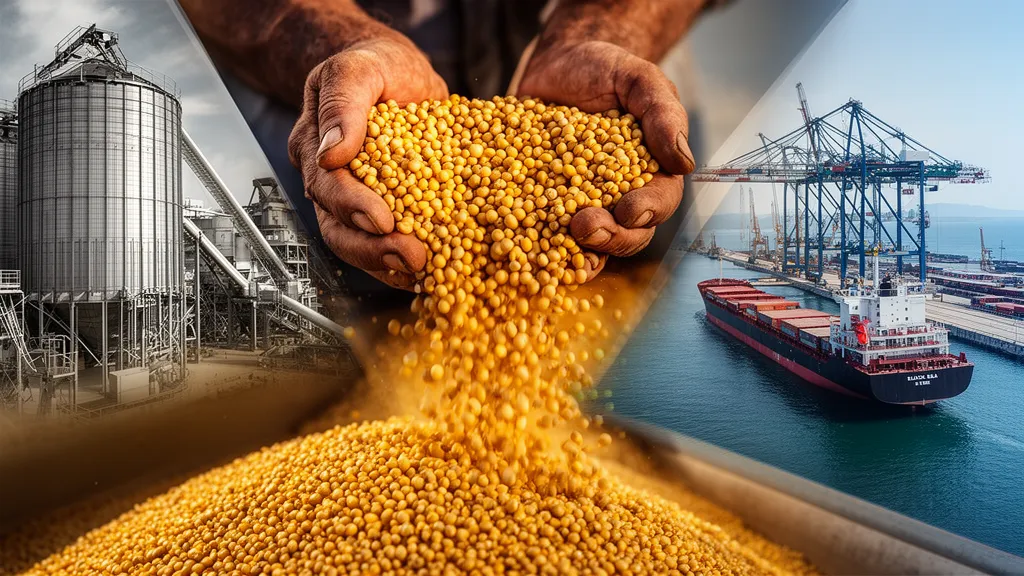
- Policy Change: Ukraine will introduce a 10% export duty on rapeseeds and soybeans from 2025, targeting trading companies rather than farmers.
- Domestic Processing Support: Revenue from the duty will fund grants, equipment compensation, war risk insurance, and support for frontline regions, boosting local crushers.
- Farmer Exemption: Agricultural producers exporting their own-grown crops are exempt, limiting direct cost impact on integrated producers.
- Price Impact: Bearish for farmgate prices via traders’ lower bids; neutral-to-bullish for export prices as the exportable surplus tightens and direct producer exports grow.
Ukraine Announces 2025 Export Duty on Rapeseeds and Soybeans
Ukraine will introduce a 10% export duty on rapeseeds and soybeans starting in 2025, according to Deputy Minister of Agriculture Taras Vysotsky. The measure was announced during the annual Ukraine-EU Association Committee meeting and is designed to stimulate investment and capacity expansion in the domestic processing industry.
The new duty will primarily apply to trading companies exporting raw oilseeds. Agricultural producers who export their own-grown rapeseeds or soybeans will be fully exempt, meaning vertically integrated farms and large producers handling their own export logistics should not face direct additional tax costs under the scheme.
Use of Revenue and Policy Objectives
Funds raised from the 10% duty will be directed into a special budget fund earmarked for agricultural support. Planned uses include grants for processing projects, compensation for processing and logistics equipment, war risk insurance programs, and targeted assistance to frontline and high-risk regions. Collectively, these measures aim to deepen value-added processing inside Ukraine and reduce the share of unprocessed seed exports.
Market Impact on Farmers, Traders, and Crushers
Bearish for farmgate prices / bullish for domestic crushers: Because trading companies must factor in the 10% duty on exports of unprocessed rapeseeds and soybeans, the competitiveness of domestic crushers for raw seed purchases should improve. To preserve export margins, traders are likely to lower purchase bids to farmers who sell via intermediaries, pressuring farmgate prices, especially for non-integrated producers.
At the same time, the relative cost advantage for local crushers could increase domestic crush demand for rapeseeds, tightening availability of unprocessed seed for export channels. This dynamic is broadly supportive for margins in Ukraine’s crushing sector, particularly for plants located near key producing regions.
Export Price Outlook and Shifting Trade Flows
Neutral-to-bullish for export prices: The exemption for agricultural producers exporting their own-grown crops introduces complexity. On one hand, the 10% duty on trader exports could reduce exportable surplus through intermediaries, lending support to FOB prices. On the other hand, large producers may expand their direct export programs to take advantage of the exemption, partially offsetting any tightening effect from the duty.
Overall, the market could see a structural shift toward more direct producer-exporter relationships, reducing the role of traditional trading houses in raw rapeseed flows. Export price formation may become increasingly sensitive to the marketing strategies and logistics capabilities of large integrated farms rather than purely to trader-driven volumes.
Source: Market Data
Leave a Reply