
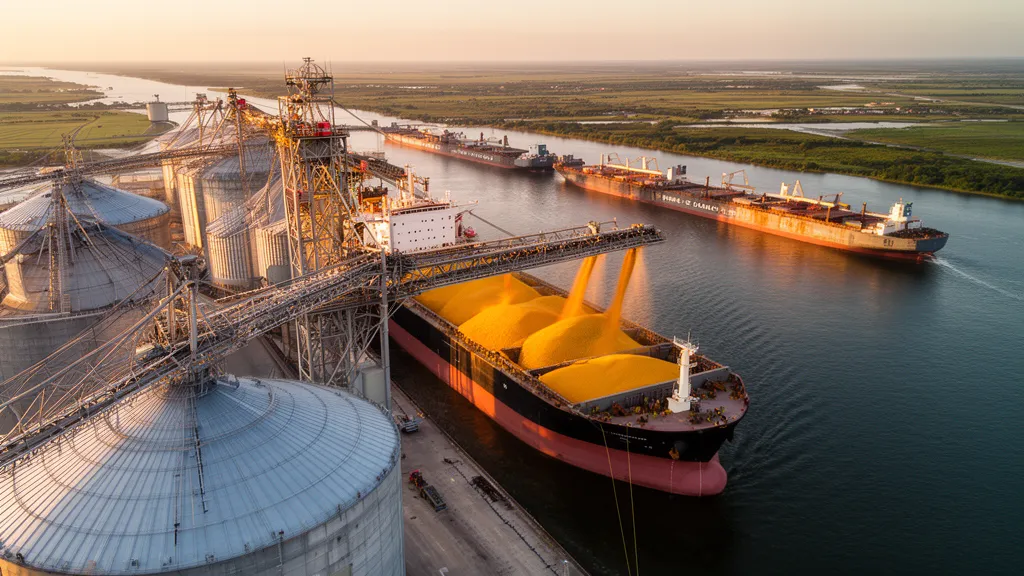
- China is accelerating purchases of US soybeans, scheduling at least six bulk carriers from US Gulf terminals by mid-December, with a seventh vessel already en route.
- Beijing’s pledge to buy 12 million tonnes of US soybeans by year-end, plus nearly 2 million tonnes already booked for 2025/26, signals a structural shift in demand back toward US origin.
- Suspension of some Brazilian soybean imports by China increases competitive pressure on Black Sea and other alternative suppliers.
- Removal of US tariffs on key fertilizers (DAP, MAP, potash) is expected to lower production costs and improve long-term price competitiveness for American soybeans.
- Bearish for alternative origins: Stronger US–China trade flows and cheaper US inputs weigh on price prospects for Black Sea and other competing exporters.
Market Update
Market sources report that China is actively booking new shipments of US soybeans, with at least six bulk carriers scheduled to load from US Gulf Coast terminals by mid-December. A seventh vessel, the first large-volume shipment since May, is already sailing toward China, underscoring a visible pickup in physical flows.
These movements are tied to a broader commitment made after high-level trade talks, in which Beijing pledged to purchase 12 million tonnes of US soybeans before year-end. Beyond the near-term surge, Chinese importers have already reserved nearly 2 million tonnes of US soybeans for delivery in the 2025/26 marketing year. This renewed interest coincides with reports that China has suspended soybean imports from selected Brazilian suppliers, further redirecting demand.
On the input side, the American Soybean Association confirmed the removal of US tariffs on key fertilizer imports, including diammonium phosphate (DAP), monoammonium phosphate (MAP), and potassium chloride (potash). Lower fertilizer costs are expected to support margins and may encourage expanded acreage and stronger export competitiveness for US producers in coming seasons.
Analysis
Bearish for alternative origins. The acceleration of Chinese buying from the US directly increases competitive pressure on Black Sea and other non-US oilseed exporters. As a portion of China’s demand is diverted toward US origin, alternative suppliers face a more challenging sales environment, even though aggregate Chinese purchases remain below pre–trade war highs. Over the longer term, reduced fertilizer costs in the US could further enhance the price competitiveness of American soybeans, reinforcing downside pressure on rival exporters’ pricing power.
Source: Market Data
Leave a Reply