
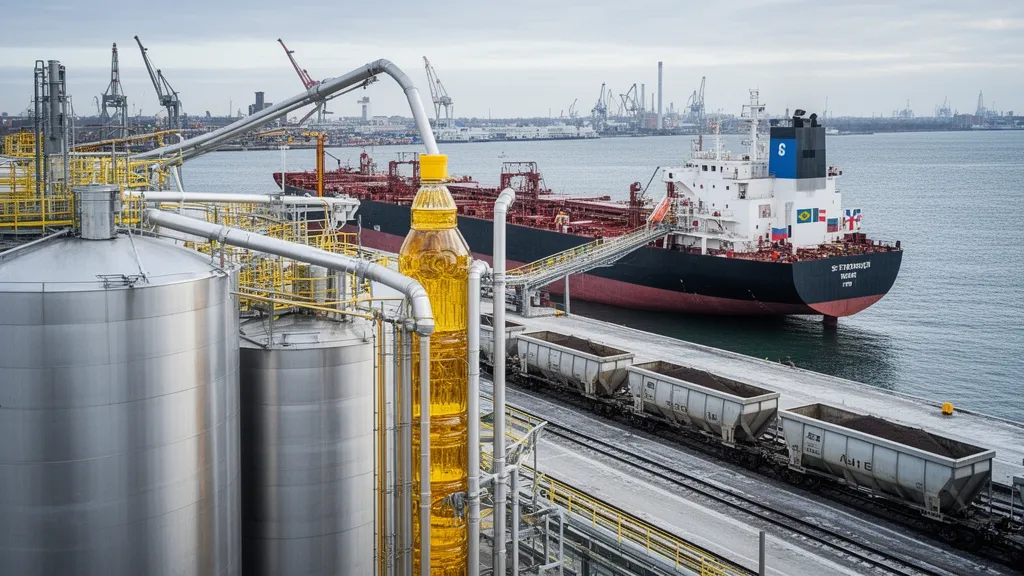
- Strategic shift: Russia is developing the Baltic Sea (St. Petersburg) as an alternative export corridor for sunflower oil, reducing reliance on Black Sea routes.
- Capacity growth: Rusagro targets up to 480,000 tons of oil transshipment via the St. Petersburg Oil Terminal by year-end, signaling expanding export optionality.
- Inland strength: Robust rail and road exports from regions like Penza (over 11,000 tons of grains and pulses) underscore the depth of Russia’s internal logistics network.
- Market impact: Overall market reaction is Neutral, but freight arbitrage opportunities increase as new routes open and niche crops reach diverse destinations.
Russia Develops Baltic Export Route
Russia is broadening its export logistics beyond the Black Sea by utilizing the Baltic port of St. Petersburg for vegetable oil shipments. On November 28, a 6,000-ton parcel of Russian sunflower oil was dispatched to Saudi Arabia from St. Petersburg for the first time, with the cargo fully compliant with the importer’s quality and safety standards.
This shipment follows Rusagro’s earlier move to open a Baltic export route to India. The agricultural holding plans to lift its total oil transshipment volume via the St. Petersburg Oil Terminal to 480,000 tons by the end of the year, reflecting a rapid scale-up in Baltic-based export capacity.
Inland Freight and Regional Export Activity
Inland logistics remain active, with the Penza region exporting more than 11,000 tons of grain and pulses by rail and road. Shipments are moving to a diversified set of markets including Belarus, Latvia, Belgium, Turkey, and Germany.
The product mix from Penza includes flaxseed, dried lentils, buckwheat, mustard seeds, forage vetch, and dried chickpeas. Rosselkhoznadzor has confirmed that all consignments comply with the phytosanitary requirements of the destination countries, supporting continued market access for these niche crops.
Market Analysis and Freight Implications
The overall impact of these developments is Neutral for the broader market, but they mark a notable strategic evolution in Russian export logistics. The emergence of the Baltic Sea as a viable corridor for vegetable oils diversifies export routes and reduces dependence on Black Sea terminals that are often exposed to geopolitical and logistical risks.
For traders and logistics players, this expanded route network introduces new freight arbitrage opportunities, allowing optimization between Baltic, Black Sea, and overland pathways. Concurrently, the steady flow of specialty grains and pulses from inland regions like Penza highlights the flexibility of Russia’s rail and road systems in serving both EU and southern destinations.
Source: Market Data
Leave a Reply